MTC maintenance cut from half a day to five minutes.
Damgaard Solutions redesigned the Material Transfer Chamber boundary on an isolator filling line at Novo Nordisk Gentofte, turning a half-day, multi-team intervention into a single-person, five-minute task with no cleanroom boundary opening under EU GMP Annex 1.
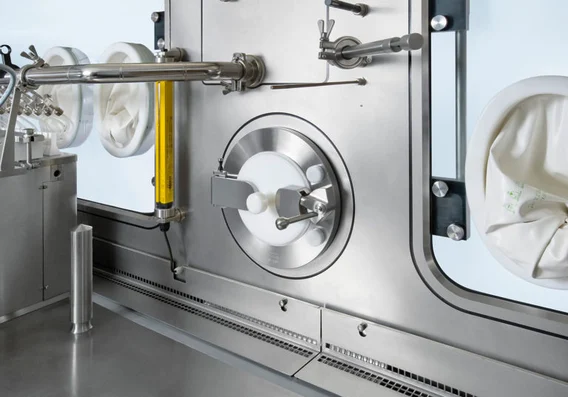
A Critical Interface Nobody Wanted to Touch
Fill Line 5 at HAC Gentofte runs an isolator-based sterile filling line with a Material Transfer Chamber (MTC), the interface used to introduce materials into the sterile environment safely. Over time, the installed solution had accumulated unresolved design issues and did not fully reflect evolving user and QA requirements, including concerns about particle monitoring and areas where particles could accumulate.
The result was a system so complex that site technicians were reluctant to work on it, and responsibility for fault-finding was unclear. Even minor interventions, such as changing hydrogen patches, required opening the barrier between the technical area and the cleanroom, coordinating operators, cleaning staff, and EM support, and accepting roughly half a day of disruption for a task that should have taken minutes. Left unresolved, every routine maintenance activity on the MTC would continue to consume disproportionate capacity and introduce avoidable contamination risk.
Systematic Troubleshooting and a Redesign Built Around Ownership
Damgaard Solutions was engaged to stabilize and operationalize the MTC, turning a difficult-to-own interface into a robust setup that supports daily operations rather than working against them.
1. Structured troubleshooting and root cause focus
Executed systematic troubleshooting across the MTC and its interfaces, prioritizing root causes over symptom fixes. Findings and resolutions were documented so on-site technicians could handle future fault-finding with clear, accessible guidance.
2. Translating requirements into concrete technical decisions
Acted as the technical bridge between Operations, QA, and the supplier, translating requirements and procedures into practical design choices. Where delivered functionality did not meet expectations, we challenged and aligned solutions to ensure the final setup was both compliant and workable.
3. Redesigning the boundary for maintainability
Redesigned the separation between the technical area and the cleanroom around the MTC. Non-essential components and activities were moved to the technical side, and the design was modified so routine work, including hydrogen patch changes, could be performed entirely from the technical room without opening into the cleanroom.
4. Anchoring changes in procedures and daily work
Technical changes were integrated into operational routines and procedures to ensure the improved setup became the new normal: repeatable, auditable, and intuitive for the people running the line.
Jesper de Fries Jensen is a Senior Engineer at Damgaard Solutions, typically brought in when equipment is so complex that others are reluctant to engage with it. He combines deep process and equipment knowledge with strong IT and scripting skills, making him particularly effective at the interface between hardware, automation systems, and documentation. Tasks placed with Jesper are resolved thoroughly, with a clear focus on avoiding future issues.